Browser access · No Android APK required

ARVIO on iPhone, iPad, Windows and Mac.

Open ARVIO Web in your browser to use your libraries and supported sources. You do not need to install an Android APK on your phone or computer. Choose the ARVIO-hosted service, or run the open-source web app yourself.

Updated 4 October 2026 · By the ARVIO project

Use the browser version on your device

iPhone and iPad

Open web.arvio.tv in your browser and sign in for the hosted service. This is browser access, not an iOS APK or a native App Store installation. Test your own sources on the actual iPhone or iPad: a video working on a PC does not guarantee that it will play on iOS.

Windows, Mac and Linux

Open the same web address in a current desktop browser. There is no Windows EXE or Mac DMG to install for this browser route. You can use the hosted service or open your own self-hosted address.

On Android TV or Google TV, start with the free Android app. TV browser support varies by model; do not assume a smart TV or Apple TV offers the same browser experience as a computer.

Two ways to run ARVIO Web

Hosted login or free self-hosting?

What to expectARVIO-hostedSelf-hosted
Where to open itweb.arvio.tvYour own server address
Sign-inYour ARVIO Cloud account and intended profileCreate or choose a local profile; no ARVIO login or trial
CostOne-time three-day trial, then optional Premium hosting at $2.99/monthNo ARVIO subscription; you provide hosting and your own API credentials
Settings and syncSupported ARVIO Cloud features for your account and profileProfiles, settings and history stay in that browser; no ARVIO Cloud sync
UpdatesManaged by ARVIOYou update your installation
Media and playbackBring your own authorized sources. Browser and format limits apply in both versions; neither includes movies, channels or third-party subscriptions.

Self-hosted Trakt or Simkl connections can sync their own supported data. They do not sync your entire ARVIO configuration. Clearing browser site data removes local profiles and settings.

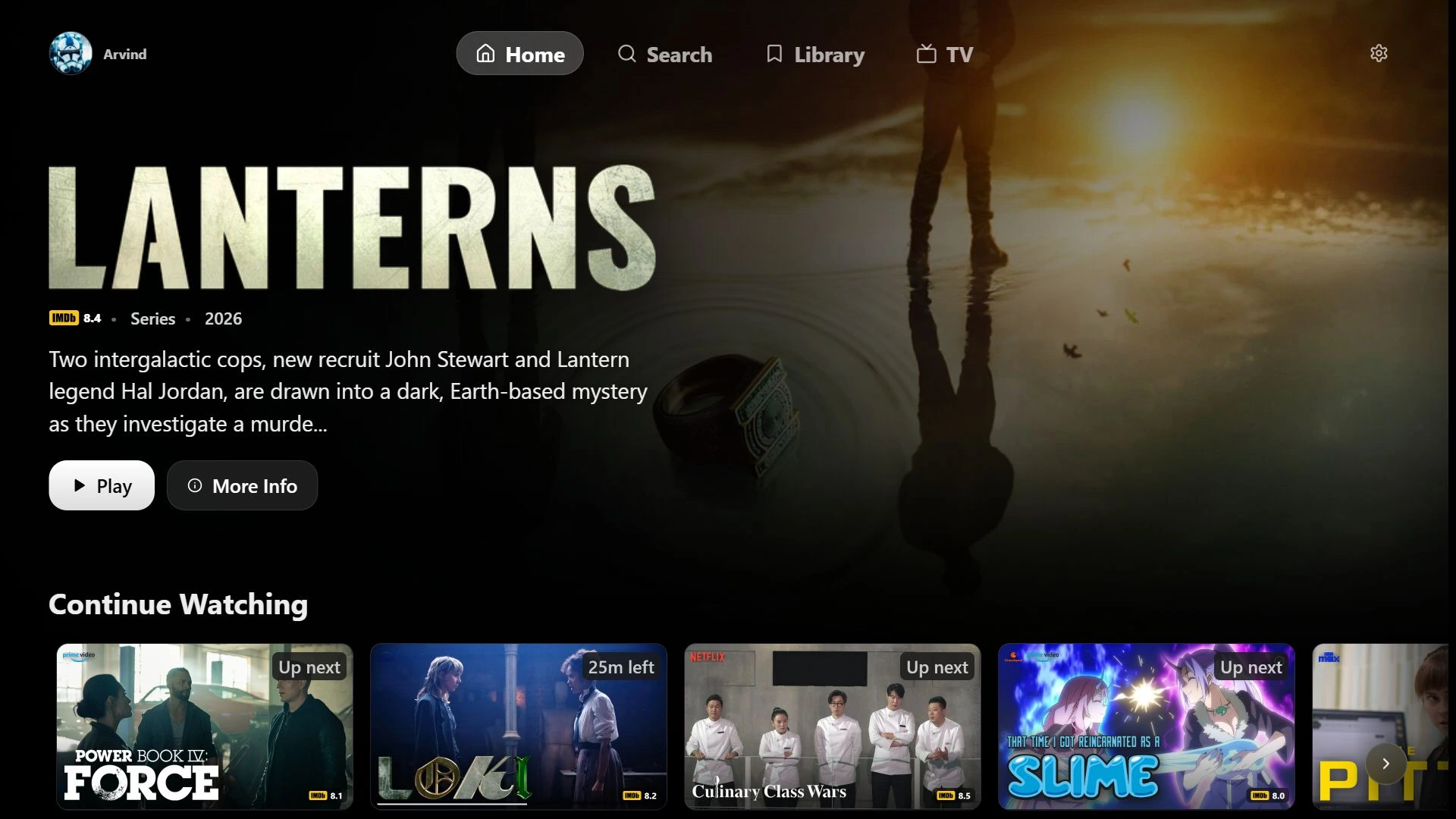
ARVIO Web home screen showing media library rows in a desktop browser interface
ARVIO Web interface. Example libraries are shown; media is not included.

First session

Set up ARVIO Web

  1. Open the correct app

    For hosted browser playback, open ARVIO Web and sign in to ARVIO Cloud. The one-time three-day trial does not require payment details. If you prefer running it yourself, follow the Docker or Node.js setup guide and open your own installation.

  2. Choose the intended profile

    On the hosted service, use the same account and profile as your existing ARVIO setup. Self-hosted profiles are local to the current browser, so you configure that installation separately.

  3. Connect one source

    For a media server, open Settings → Home Server, choose the server type and enter its full server address and credentials. Use Test before Add. The web form uses a Plex token for Plex; it is different from Android's code sign-in. For an addon, use the manifest URL field and Install in the Addons panel. Configure your own live TV playlist in Settings if needed.

  4. Test a known item

    For server libraries, open Library → Homeserver and choose the server and library. Try a title you know your account can play, then test audio and subtitles. A visible poster or a successful server login alone does not confirm playback.

Looking for the addon-management dashboard? Open the ARVIO Dashboard. It is separate from the browser playback app linked above.

Check playback before choosing hosting

MP4 with H.264 video and AAC audio is a useful first test. HEVC, remux files, lossless audio, subtitles and live streams can behave differently across browsers and devices. Self-hosting does not add a transcoding service or make every file browser-playable.

A home server also needs to be reachable through the full connection path. Hosted ARVIO Web's server requests cannot reach a private LAN address such as 192.168.x.x just because your browser is on that network. A trusted self-hosted setup has different networking options; HTTPS, cross-origin rules and browser restrictions still matter. Do not disable server authentication or expose it publicly just to work around an error.

Common questions

Setup and troubleshooting

Is ARVIO available on iPhone and iPad?

This guide covers ARVIO Web in the browser on iPhone and iPad. An Android APK cannot be installed on iOS. Use the hosted web app or your own self-hosted installation, and test the formats and sources you use on that device.

How do I use ARVIO on Windows or Mac?

Open web.arvio.tv in a current browser for the hosted app, or open your self-hosted ARVIO address. This browser route does not require a Windows EXE, Mac DMG or Android emulator.

Do I need Premium to use ARVIO Web?

Premium is required to continue using the optional ARVIO-hosted service after its one-time trial. You can self-host the open-source web app without an ARVIO subscription using your own hosting and API credentials. The Android app is also free.

Why am I seeing a dashboard instead of the player?

The addon-management dashboard at arvio.tv/web/ is separate from the browser playback app at web.arvio.tv. Open the browser app for ARVIO Web playback and its hosted sign-in.

Why does my library load but a video fail to play?

Library access and video playback are separate checks. The media URL must be reachable, and its container, video, audio and subtitles must work with the device and browser. Follow the browser playback checklist and compare with a known compatible file.

Does self-hosting sync all my Android settings?

No. Self-hosted profiles, settings and history live in the current browser and do not use ARVIO Cloud. Connected Trakt or Simkl accounts can sync their own supported data, not your full ARVIO setup. Clearing site data removes browser-local data.

Still stuck? Ask in the ARVIO Discord with your device, app or browser version and the error message. Do not share passwords, access tokens or private provider URLs.